Obelisks
Karnak Temple Tour from Hurghada takes you to the ancient world where the Amun-Ra complex at Karnak, which covers more than 200 acres of sacred sandstone and granite on the east bank of the Nile River, is not just one temple, but the largest ancient religious complex ever built by human hands.
Built, expanded, modified, and embellished over a period of nearly 2,000 years by more than 30 successive pharaohs (from the Middle Kingdom through the Ptolemaic and Roman eras), Karnak served as the spiritual center of the ancient Egyptian empire (Ipet-sut, meaning “The Most Select of Places”).
Booking a specialized Karnak Temple tour from Hurghada provides an unparalleled opportunity to leave the coastal beaches of the Red Sea behind and immerse yourself in the sheer scale of imperial pharaonic power. Walking through its towering pylons, you stand beneath 134 colossal sandstone columns, marvel at single-block rose granite obelisks weighing over 300 tons, and follow the newly restored Avenue of Sphinxes that connects Karnak directly to Luxor Temple.
However, navigating a site that housed thousands of priests, royal treasury halls, sacred lakes, and complex astronomical alignments requires structured expert planning. Without a dedicated itinerary and an experienced Egyptologist guide, visitors can easily become overwhelmed by the sheer density of stone monuments and miss crucial architectural highlights.
At Manolo Tours Egypt, we have perfected the seamless Karnak Temple tour from Hurghada. By integrating direct VIP desert transport, early-morning crowd avoidance strategies, and university-degreed historical guidance, we ensure your exploration of Karnak is deeply educational, visually stunning, and entirely stress-free.
What Makes a Karnak Temple Tour from Hurghada Essential?
A dedicated Karnak Temple tour from Hurghada delivers a direct, comfortable journey to the crown jewel of ancient Egyptian temple architecture. Operating via private climate-controlled vehicles across the Safaga–Qena desert highway, you arrive at Karnak during optimal early-morning lighting hours.
Your guided experience includes a complete walkthrough of the First Pylon, the Great Hypostyle Hall, the Obelisks of Hatshepsut and Thutmose I, the Sacred Lake, and the Avenue of Sphinxes—all decoded in detail by your private Egyptologist.
- Granite Obelisks of Hatshepsut
Karnak Temple features extraordinary engineering feats, nowhere more evident than in its towering granite obelisks. Carved from single blocks of pink granite quarried in Aswan, these 30-meter monoliths showcase the supreme architectural mastery of New Kingdom builders. Among them stands the famed obelisk of Queen Hatshepsut, weighing roughly 340 tons, erected to honor her divine father Amun-Ra and celebrate her royal jubilee.
- The Sacred Lake
Measuring an impressive 120 by 77 meters, the Sacred Lake served as the spiritual and ritual heart of the Karnak temple complex. Fed by natural groundwater from the Nile, this stone-lined basin was used daily by high priests for ceremonial purifications before performing sacred temple rites. It also provided the setting for elaborate religious festivals, where sacred solar barques were navigated across its waters to honor the gods.
2,000 Years of Pharaonic Expansion
Unlike other ancient monuments built during a single monarch’s reign, Karnak Temple is a colossal layers-of-history architectural project spanning over twenty centuries. Taking a Karnak Temple tour from Hurghada allows you to walk through a physical timeline of Egyptian history, moving backwards in time as you walk deeper into the sanctuary from west to east.
- The Middle Kingdom Foundations (c. 1971–1786 BCE)
The story of Karnak began during the Middle Kingdom, when Pharaoh Senusret I constructed its earliest limestone sanctuary along with the delicate White Chapel. This foundational period elevated Amun-Re to the status of supreme state deity of Thebes, transforming a modest local shrine into the sacred center of the royal capital.
- The Golden Imperial Era of the New Kingdom (c. 1550–1069 BCE)
Karnak experienced unprecedented expansion during the New Kingdom, as successive rulers continuously added to the complex to honor the gods and immortalize their reigns. Legendary pharaohs like Hatshepsut, Thutmose III, Seti I, and Ramses II erected massive monumental pylons, towering single-block granite obelisks, and the breathtaking Great Hypostyle Hall. Backed by the riches of a expanding empire, Karnak grew into the wealthiest and most influential religious institution in the ancient world.
- Late & Ptolemaic Expansion (c. 664–30 BCE)
The complex continued to grow even into antiquity’s final eras, receiving monumental additions under Nubian Pharaohs like Taharqa as well as the Greek Ptolemaic dynasty. During this stage, rulers constructed the colossal First Pylon entrance and expansive mud-brick outer enclosure walls, framing the vast temple precincts into the impressive sprawling complex seen today.
Why Rulers Keep Adding to Karnak:
Every pharaoh sought to legitimize their divine rule by adding their own monuments to Amun-Re’s domain. Rulers constantly dismantled, recycled (talatat blocks), and expanded earlier structures, resulting in a dense architectural complex containing 10 distinct pylon gates, numerous courtyards, inner sanctuaries, and secondary temples dedicated to Mut and Khonsu.
The Grand Entrance & Ram-Headed Sphinx Avenue
Your Karnak Temple tour from Hurghada begins at the Western Approach, where ancient barque processions once arrived directly from the Nile River via a dedicated canal basin.
- The Processional Approach and Unfinished First Pylon
Your arrival at Karnak Temple follows the ancient ceremonial path, starting at the Nile Canal Quay where sacred river barges once docked. From the quay, visitors walk along the Dromos—an avenue lined on both sides with ram-headed sphinxes representing the protective power of Amun-Ra. This avenue leads directly to the massive First Pylon, a colossal 113-meter-wide stone gateway left intentionally unfinished in antiquity, offering a rare look at ancient Egyptian quarrying and mud-brick ramp construction methods.
- The Great Forecourt and Central Monuments
Passing through the First Pylon brings you into the sprawling Great Forecourt, an expansive 100-meter-wide plaza designed to host large public gatherings during major religious festivals. At the center of the courtyard stand the remaining soaring columns of the Kiosk of Taharqa, built by the 25th Dynasty Nubian pharaoh. Positioned directly opposite along the southern side of the court is the dedicated Temple of Ramses III, a fully intact, mini-sanctuary complete with its own Osiride statues and pylons built right inside the main precinct walls.
The Ram-Headed Sphinx Dromos:
Before stepping through the massive outer gate, you walk along a paved ceremonial avenue flanked on both sides by statues of ram-headed sphinxes.
The Symbolism: The ram is the sacred animal representation of Amun-Re.
Royal Protection: Nestled safely beneath the chin of each sphinx stands a small statue of Pharaoh Ramses II, symbolizing the king receiving divine protection and authority directly from the god.
The Unfinished First Pylon:
Standing at the entrance is the colossal First Pylon, built during the 30th Dynasty (or Ptolemaic Era). Rising 31 meters high and spanning 113 meters wide, this gate remains raw and unfinished:
Evidence of Construction Techniques: On the inner side of the pylon wall, your guide will point out the remains of ancient mud-brick ramps used by workers to haul massive stone blocks to the top—providing living architectural proof of how ancient Egyptians constructed monumental walls without cranes.
The Great Forecourt & Kiosk of Taharqa:
Stepping inside the 8,000-square-meter outer courtyard, you encounter:
The Kiosk of Taharqa: A massive 29-meter single open papyrus column standing as the sole survivor of a grand ten-column pavilion built by the Nubian Pharaoh Taharqa (25th Dynasty).
The Temple of Ramses III: A complete, self-contained mini-temple built on the southern side of the court, featuring Osiris-form statues of Ramses II and intact battle reliefs detailing victories over the Sea Peoples.
The Great Hypostyle Hall: Architectural Engineering Marvel
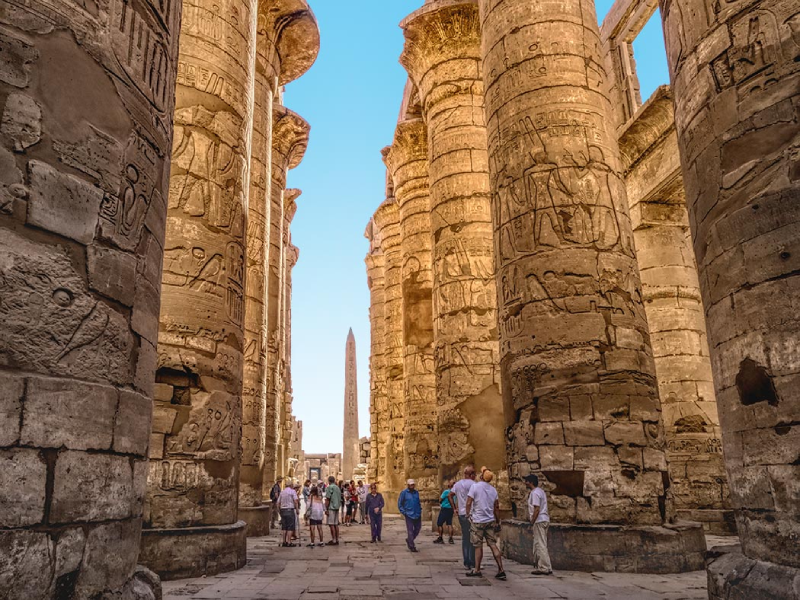
Stepping through the Second Pylon brings you into what is universally recognized as one of the single greatest structural achievements in architectural history: The Great Hypostyle Hall. Spanning an area of 5,000 square meters (large enough to fit the entire Cathedral of Notre-Dame), this stone forest features 134 massive sandstone columns arranged in 16 rows.
- The Sunlit Central Aisle (12 Soaring Columns)
The central processional avenue of the Great Hypostyle Hall features 12 colossal sandstone columns that rise to an extraordinary height of 21 meters (69 feet), with shaft circumferences measuring 10 meters (33 feet). Crowned with open papyrus capitals that spread wide like flowers blooming under the sun, these central pillars were positioned beneath upper stone clerestory grilles. This layout allowed natural sunlight to stream into the main hall, illuminating the sacred processional path during religious ceremonies.
- The Mystical Side Aisles (122 Closed-Bud Columns)
Flanking the central aisle are 122 secondary columns arranged in dense rows, standing 13 meters (43 feet) high with circumferences of 8 meters (26 feet). Designed with closed papyrus bud capitals, these shorter columns supported a lower roofline, creating a dimly lit, shadow-filled interior. This architectural contrast was intentional, mimicking the primordial marsh thickets from which the ancient Egyptians believed the cosmos was created.
Construction & Royal Legacies (Seti I & Ramses II):
The hall was initiated by Amenhotep III, but the monumental execution was carried out primarily by two 19th Dynasty rulers:
The Northern Wing (Seti I):
Features exquisite, delicate low-relief carvings (bas-relief) showing the king interacting with deities. Seti I’s master sculptors chiselled the background stone away, leaving smooth, raised figures that catch gentle side-lighting.
The Southern Wing (Ramses II):
Features deep sunk-relief carvings (intaglio). Ramses II modified sculpturing techniques to carve deep into the stone so his cartouches could not be easily erased or chiselled over by future rulers.
The Clerestory Roof & Light Manipulation:
Ancient Egyptian architects designed the central nave higher than the side aisles. This elevation difference allowed them to install stone lattice windows (clerestories) at roof level:
Sunbeam Geometry:
During early morning hours, tight shafts of sunlight pierce through the high stone grilles, illuminating the golden-painted reliefs on the central open columns while leaving the surrounding 122 side columns shrouded in sacred twilight.
- Tactical Photography Strategy for the Hypostyle Hall
To capture the most striking images inside the Great Hypostyle Hall, aim for an optimal shooting window between 08:30 AM and 10:00 AM, when early morning sun angles produce dramatic, high-contrast light beams streaming through the upper clerestory grilles. Utilizing an ultra-wide-angle lens (12mm–16mm) pointed directly upward allows you to capture the full, massive scale of the architecture; for the best composition, set your focus point on the top of an open central papyrus capital framed against the clear blue sky above.
The Battle Reliefs on the Outer Walls:
Your private guide will lead you around the exterior northern and southern walls of the hall:
Battle of Kadesh (Southern Exterior):
Detailed, carved relief scenes depicting Ramses II charging in his royal war chariot against Hittite forces, complete with hieroglyphic battle narratives.
The Campaign of Seti I (Northern Exterior):
Shows Seti I capturing fortified cities in Canaan and Lebanon, hauling prized cedar logs back to Amun-Re’s sanctuary in Thebes.
Obelisks of & Thutmose I
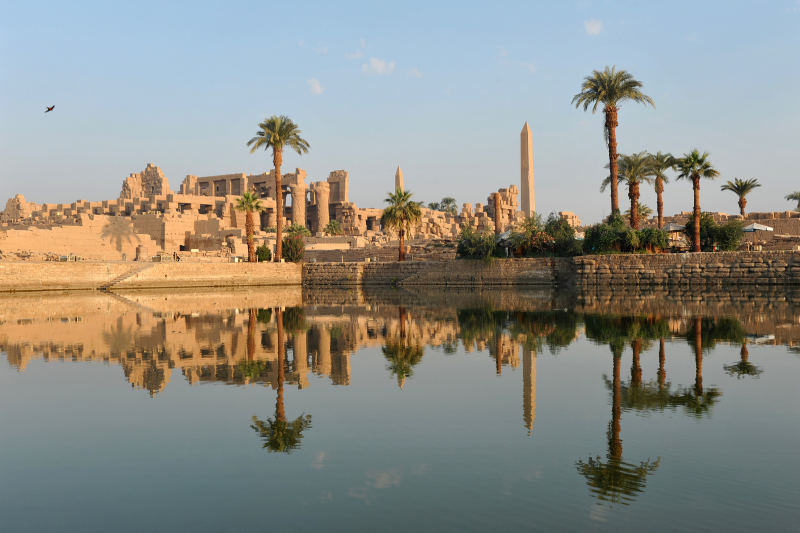
Karnak TempleObelisks Tour from Hurghada_
As you pass beyond the Hypostyle Hall along the main East-West ritual axis, you enter the older heart of Karnak. Here, single monolithic shafts of pink granite reach toward the sky, serving as physical solar needles that linked the earth directly to the sun god, Amun-Re.
The Obelisk of Thutmose I:
Standing 19.5 meters tall and weighing over 140 tons, this single block of rose granite from Aswan was erected by Thutmose I (18th Dynasty). It is one of the few ancient obelisks that remains standing in its original historical location inside Egypt.
The Obelisk of Queen Hatshepsut:
Rising 29.5 meters high and weighing an astounding 340 tons, this is the tallest surviving standing obelisk in Egypt:
Engineering Brilliance: Carved from a single solid piece of pink granite in the quarries of Aswan, transported down the Nile on massive wooden barges, and erected upright with incredible geometric precision.
The Wall of Concealment: Your guide will point out how her stepson/successor, Thutmose III, built a high stone wall around the lower half of her obelisk rather than destroying it—attempting to hide her royal name from public view while avoiding the sacrilege of breaking a monument dedicated to Amun.
The Sacred Lake, Scarab Statue & Ritual Purification
Located to the south of the central axis lies the Sacred Lake (Isheru), an essential component of daily temple rituals.
The Sacred Lake (Isheru):
Measuring 120 meters by 77 meters, this stone-lined lake was fed directly by natural underground Nile water table currents:
High Priest Purifications:
Priests were required to bathe in its sacred waters four times daily (twice by day, twice by night) before entering the inner Holy of Holies.
Sacred Barque Ceremonies:
During nocturnal festivals, golden sacred barques carrying images of the gods floated across the tranquil lake under the stars.
The Colossal Granite Scarab (Khepri):
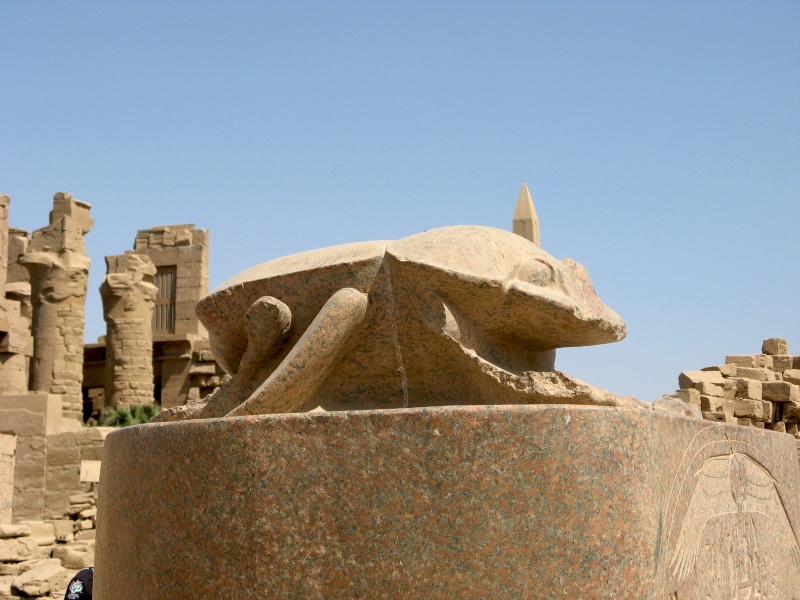
Karnak TempleGranite Scarab Tour from Hurghada_
Near the edge of the lake sits a giant rose granite statue of a scarab beetle, commissioned by Amenhotep III to honor Khepri, the god of the rising sun and eternal rebirth:
Local Folklore Tradition:
Visitors often walk counter-clockwise around this giant scarab statue multiple times—a popular modern tradition believed to bring good fortune, health, and safe travels.
The Restored Avenue of Sphinxes: Connecting Karnak to Luxor Temple
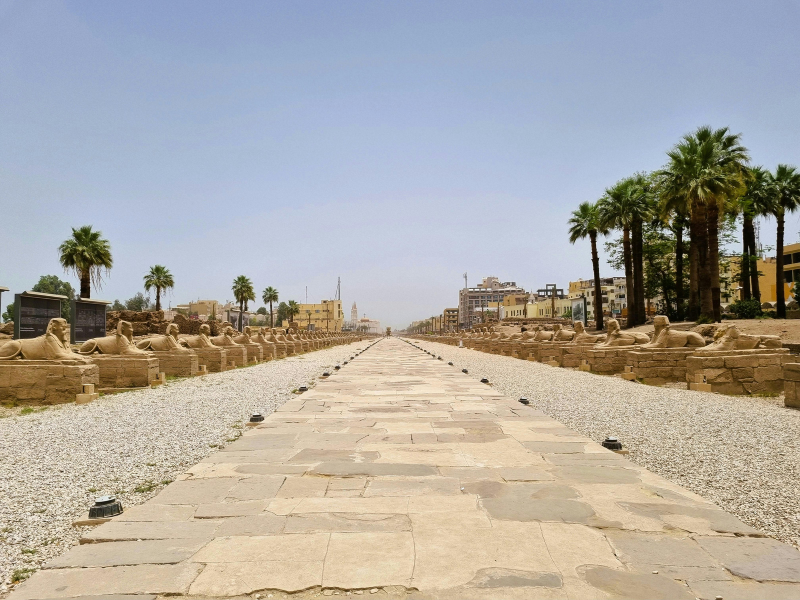
Karnak TemplAvenue of Sphinxese Tour from Hurghada_
Extending 2.7 kilometers (1.7 miles) from the Tenth Pylon of Karnak directly to the front gates of Luxor Temple lies the ancient grand processional highway known as Kebsh Avenue or the Avenue of Sphinxes (Wadjet-Amon).
Re-opened to the world in a historic ceremony after decades of painstaking excavation and architectural restoration, walking this sacred highway is a premier highlight of a private Karnak Temple tour from Hurghada:
Crowd Avoidance & Photography Lighting Strategy
Because Karnak is a primary stop for all Red Sea excursions, managing site flow and lighting conditions makes the difference between an unforgettable historical experience and a crowded struggle.
Expert Photography Tips for Karnak:
The Great Hypostyle Clerestory Shot: Stand in the middle of the central north-south aisle at 09:00 AM. Frame your lens upward toward the stone window grilles to capture distinct solar light rays breaking through the columns.
The Sacred Lake Reflection Angle: Position yourself along the eastern granite wall of the Sacred Lake to capture the mirror reflection of Queen Hatshepsut’s obelisk shimmering on the water surface.
The Ram-Headed Sphinx Perspective: Get low along the dromos path to align the chin of a ram-headed sphinx with the towering First Pylon in the background for a dramatic sense of scale.
Driving from Hurghada to the East Bank
Executing a smooth, stress-free Karnak Temple tour from Hurghada relies on precise road transit across the Eastern Desert divide to the East Bank of Luxor.
Direct East Bank Access Advantage:
Unlike West Bank tours that require crossing the Luxor Bridge first, a dedicated Karnak Temple tour from Hurghada exits the Qena-Luxor highway directly onto the East Bank road—placing you at the temple gates within minutes of entering the city.
Financial & Entry Ticket Breakdown
To maintain complete financial clarity, here is the official entrance fee structure and ticket policy enforced by the Supreme Council of Antiquities at Karnak Temple:
- Main Karnak Entry Ticket
The standard admission ticket grants full access to the primary historical highlights within the Precinct of Amun-Re. This includes entry through the First Pylon, the Great Hypostyle Hall, the granite obelisks, the Sacred Lake, and the main processional pathways through the Open Air Museum grounds. This foundational entry pass is fully included in your Manolo Tours VIP private package.
- Open Air Museum Special Access Pass
For visitors wanting to explore finely preserved architectural gems, the Open Air Museum requires a separate add-on ticket. This pass grants access to carefully reconstructed ancient sanctuaries located within the temple perimeter, most notably Pharaoh Senusret I’s exquisite Middle Kingdom White Chapel and Queen Hatshepsut’s famous quartzite Red Chapel. The add-on can be easily purchased at the main entrance ticket booth.
- Electric Tuf-Tuf Shuttle Service
To save time and conserve energy, a solar-powered “Tuf-Tuf” shuttle operates along the 500-meter approach leading from the main Visitor Center to the First Pylon entrance. Shuttle tokens or access passes are provided upon entry to ensure a smooth, comfortable transfer directly to the temple gates.
- Official Gate Payment Policy
The official ticket windows at Karnak Temple strictly enforce a card-only payment policy. All transactions for site passes, camera permits, and add-on tickets must be completed using a credit or debit card (Visa or Mastercard), as local ticket booths no longer accept physical cash currency under any circumstances.
FAQs
What is included in a standard Karnak Temple tour from Hurghada?
A dedicated private tour with Manolo Tours Egypt includes VIP private transfers across the desert highway, entry tickets to, and a university-degreed private Egyptologist guide to lead you through the Great Hypostyle Hall, Obelisks, and Sacred Lake.
How big is Karnak Temple, and how much walking is required?
spans over 200 acres. A standard comprehensive walkthrough covers approximately 2 to 3 kilometers of walking along flat sandstone and gravel pathways.
How many columns are inside the Great Hypostyle Hall at Karnak?
The Great Hypostyle Hall features exactly 134 colossal sandstone columns arranged in 16 rows, with the 12 central columns rising to a height of 21 meters.
Can I buy Karnak Temple entrance tickets with physical cash?
No. The official ticket windows at strictly enforce a card-only payment policy (Visa or Mastercard). When you book with Manolo Tours Egypt, all entry passes are pre-purchased and ready upon arrival.
Is photography allowed inside Karnak Temple?
Yes! Smartphone photography is 100% free throughout the entire temple complex. Tripods and professional cameras require a separate commercial photography permit.
How long does it take to drive from Hurghada to Karnak Temple?
The direct highway travel time from Hurghada to on the East Bank of Luxor is approximately 3.5 to 4 hours each way via a private climate-controlled vehicle.
What is the Avenue of Sphinxes, and can we walk along it?
The Avenue of Sphinxes is a newly restored 2.7-kilometer ancient processional highway flanked by over 1,000 carved stone sphinxes connecting directly to Luxor Temple. You can walk along sections of this sacred avenue during your tour.
What is the best time of day to explore Karnak Temple to avoid crowds?
Arriving early in the morning (between 08:00 AM and 09:30 AM) ensures you explore the Hypostyle Hall in cool temperatures and peaceful lighting before commercial group buses arrive.
Are there golf carts or electric shuttles available inside Karnak?
Yes, electric “Tuf-Tuf” shuttles transport visitors from the modernized Visitor Center across the outer plaza directly to the First Pylon entrance.
Can a Karnak Temple tour from Hurghada be combined with West Bank sites?
Yes! A full-day private itinerary seamlessly combines on the East Bank with the Valley of the Kings and Hatshepsut Temple on the West Bank on the same day.
Key Takeaways
A private Karnak Temple tour from Hurghada provides seamless, climate-controlled access to the largest ancient religious complex ever built by human hands.
Expert Egyptologist guidance transforms 200 acres of stone into a living 2,000-year history of ancient Egyptian imperial expansion.
Standing among the 134 towering columns of the Great Hypostyle Hall and viewing Queen Hatshepsut’s 340-ton granite obelisk are bucket-list historical highlights.
Pre-purchased digital tickets ensure you bypass card-payment window lines and step directly into the sanctuary upon arrival.
Book Your Private Karnak Temple Tour Today
Ready to stand beneath the giant stone columns of Amun-Re’s imperial sanctuary with complete VIP execution, deep scholarly guidance, and zero crowd stress? Reserve your private excursion with Manolo Tours Egypt today.